

Can Covalent Compounds Conduct Electricity
45 The Covalent Bond
LumenLearning
Comparison between Covalent and Ionic Compounds
Covalent and ionic compounds have singled-out physical properties.
LEARNING OBJECTIVES
Identify element pairs which are probable to form ionic or covalent bonds
KEY TAKEAWAYS
Key Points
- Ionic compounds are formed from strong electrostatic interactions between ions, which outcome in college melting points and electrical conductivity compared to covalent compounds.
- Covalent compounds accept bonds where electrons are shared between atoms. Due to the sharing of electrons, they exhibit feature concrete properties that include lower melting points and conductivity compared to ionic compounds.
Key Terms
- valence electrons: Electrons in the outermost principal energy (valence) level of an atom that can participate in the germination of chemical bonds with other atoms.
- : Atoms lose, gain, or share electrons in society to have a full valence level of eight electrons. Hydrogen and helium are exceptions because they can hold a maximum of two valence electrons.
- : The tendency of an atom or molecule to attract electrons and form bonds.
Two Classes of Compounds
Compounds are defined as substances containing two or more different chemic elements. They have distinct chemic structures characterized by a fixed ratio of atoms held together past chemical bonds. Here, we discuss two classes of compounds based on the bail type that holds the atoms together: ionic and covalent.
Covalent Compounds
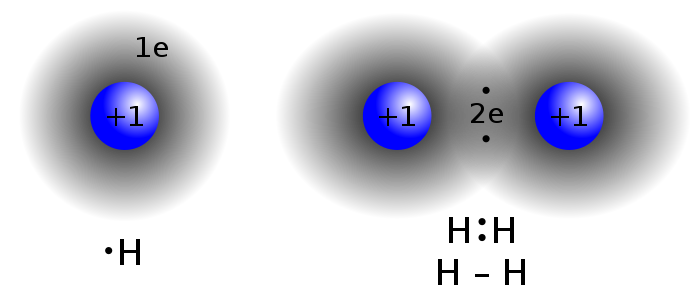
Covalent bonds are characterized by the sharing of electrons between ii or more atoms. These bonds mostly occur between nonmetals or betwixt 2 of the same (or similar) elements.Two atoms with similar electronegativity willnotcommutation an electron from their outermost shell; the atoms insteadshareelectrons so that their valence electron shell is filled.
Examples of compounds that comprise but covalent bonds are methyl hydride ([latex]\text{CH}_4[/latex]), carbon monoxide ([latex]\text{CO}[/latex]), and iodine monobromide ([latex]\text{IBr}[/latex]).
Ionic Compounds
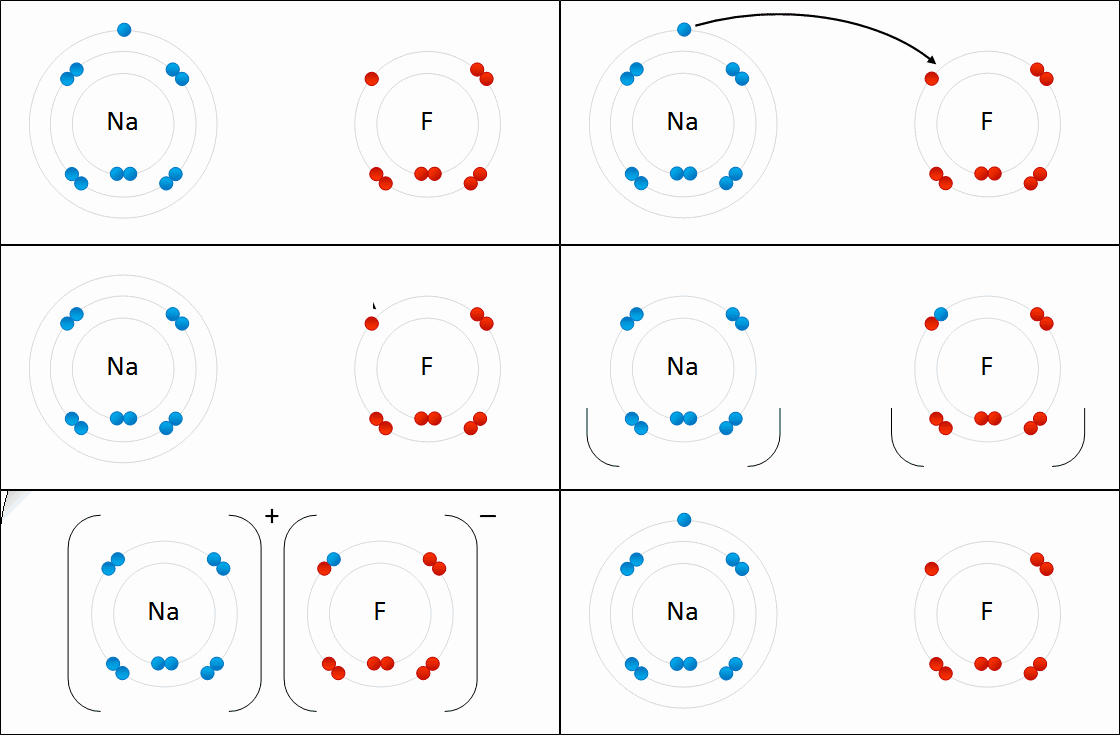
Ionic bonding occurs when there is a large divergence in electronegativity between two atoms. This big departure leads to the loss of an electron from the less electronegative cantlet and the gain of that electron by the more than electronegative atom, resulting in two ions. These oppositely charged ions experience an attraction to each other, and this electrostatic attraction constitutes an ionic bond.
Ionic bonding occurs betwixt a nonmetal, which acts as an electron acceptor, and a metal, which acts as an electron donor. Metals take few valence electrons, whereas nonmetals take closer to eight valence electrons; to hands satisfy the octet rule, the nonmetal will accept an electron donated by the metallic. More than than ane electron tin be donated and received in an ionic bond.
Some examples of compounds with ionic bonding include [latex]\text{NaCl}[/latex], [latex]\text{KI}[/latex], [latex]\text{MgCl}_2[/latex].
Effect on Physical Properties
Covalent and ionic compounds can be differentiated easily because of their dissimilar concrete properties based on the nature of their bonding. Hither are some differences:
- At room temperature and normal atmospheric pressure, covalent compounds may exist equally a solid, a liquid, or a gas, whereas ionic compounds exist only every bit solids.
- Although solid ionic compounds do not conduct electricity because there are no free mobile ions or electrons, ionic compounds dissolved in h2o make an electrically conductive solution. In contrast, covalent compounds do not showroom any conductivity, either in pure form or when dissolved in water.
- Ionic compounds exist in stable crystalline structures. Therefore, they accept higher melting and boiling points compared to covalent compounds.
Single Covalent Bonds
Single covalent bonds are sigma bonds, which occur when one pair of electrons is shared between atoms.
LEARNING OBJECTIVES
Identify the iv orbital types used in covalent bond formation
KEY TAKEAWAYS
Key Points
- Covalent bonds occur when electrons are shared between two atoms. A single covalent bail is when simply one pair of electrons is shared between atoms.
- A sigma bail is the strongest type of covalent bond, in which the atomic orbitals direct overlap betwixt the nuclei of two atoms.
- Sigma bonds tin can occur between any kind of atomic orbitals; the only requirement is that the atomic orbital overlap happens directly betwixt the nuclei of atoms.
Key Terms
- sigma bond: A covalent bail whose electron density is full-bodied in the region directly between the nuclei.
- : A type of chemical bail where two atoms are connected to each other by the sharing of 2 or more electrons.
- atomic orbital: A region in space around the atom's nucleus where there is a probability of finding an electron.
Hierarchical Structure of the Atom
There are four hierarchical levels that draw the position and free energy of the electrons an atom has. Here they are listed forth with some of the possible values (or messages) they can have:
- Principal free energy levels (1, 2, 3, etc.)
- Sublevels (s, p, d, f)
- Orbitals
- Electrons
Principal free energy levels are made out of sublevels, which are in plow made out of orbitals, in which electrons are found.
Diminutive Orbitals
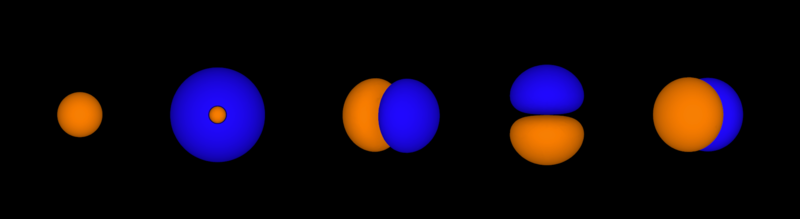
An atomic orbital is divers as the probability of finding an electron in an surface area around an atom's nucleus. More often than not, orbital shapes are drawn to describe the region in space in which electrons are likely to be found. This is referred to as "electron density."
Atomic Orbitals
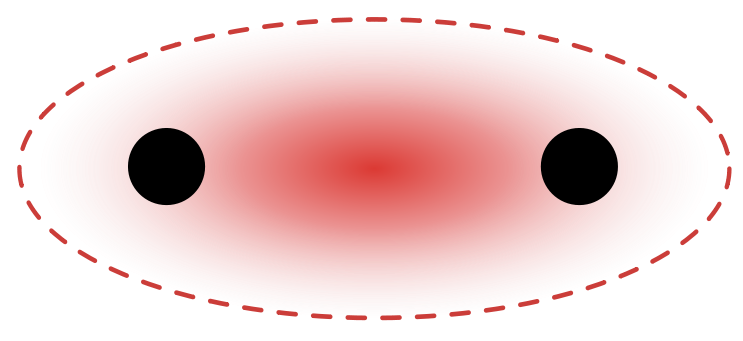
Covalent bonding occurs when two diminutive orbitals come together in shut proximity and their electron densities overlap. The strongest blazon of covalent bonds are sigma bonds, which are formed by the directly overlap of orbitals from each of the ii bonded atoms. Regardless of the atomic orbital type, sigma bonds can occur every bit long as the orbitals directly overlap between the nuclei of the atoms.
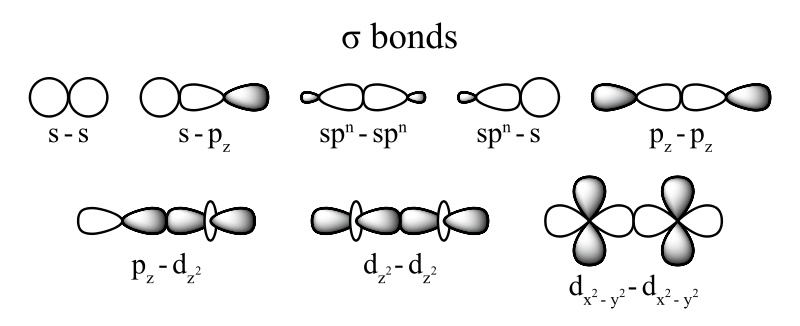
Unmarried covalent bonds occur when one pair of electrons is shared between atoms as part of a molecule or compound. A single covalent bond can be represented by a single line between the 2 atoms. For instance, the diatomic hydrogen molecule, [latex]\text{H}_2[/latex], can be written every bit [latex]\text{H-H}[/latex] to indicate the single covalent bond between the two hydrogen atoms.
Double and Triple Covalent Bonds
Double and triple bonds, comprised of sigma and pi bonds, increase the stability and restrict the geometry of a compound.
LEARNING OBJECTIVES
Describe the types of orbital overlap that occur in single, double, and triple bonds
Key TAKEAWAYS
Central Points
- Double and triple covalent bonds are stronger than single covalent bonds and they are characterized by the sharing of four or six electrons between atoms, respectively.
- Double and triple bonds are comprised of sigma bonds between hybridized orbitals, and pi bonds between unhybridized p orbitals. Double and triple bonds offer added stability to compounds, and restrict whatever rotation around the bond axis.
- Bond lengths between atoms with multiple bonds are shorter than in those with unmarried bonds.
Key Terms
- bail strength: Direct related to the amount of energy required to break the bond between two atoms. The more free energy required, the stronger the bond is said to be.
- : The distance between the nuclei of ii bonded atoms. It can be experimentally determined.
- orbital hybridization: The concept of mixing atomic orbitals to form new hybrid orbitals suitable for the qualitative description of atomic bonding properties and geometries.
- atomic orbitals: The physical region in infinite around the nucleus where an electron has a probability of being.
Double and Triple Covalent Bonds
Covalent bonding occurs when electrons are shared between atoms. Double and triple covalent bonds occur when 4 or six electrons are shared between two atoms, and they are indicated in Lewis structures by cartoon two or three lines connecting one atom to some other. It is important to annotation that only atoms with the demand to gain or lose at least 2 valence electrons through sharing can participate in multiple bonds.
Physical Properties of Covalent Molecules
The covalent bonding model helps predict many of the physical properties of compounds.
LEARNING OBJECTIVES
Discuss the qualitative predictions of covalent bond theory on the humid and melting points, bond length and strength, and electrical conductivity of molecules
Key TAKEAWAYS
Key Points
- The Lewis theory of covalent bonding says that the bail force of double bonds is twice that of single bonds, which is not truthful.
- General physical properties that tin can be explained by the covalent bonding model include boiling and melting points, electrical conductivity, bail force, and bail length.
Key Terms
- : The distance between the nuclei of two bonded atoms. Information technology can exist experimentally adamant.
- intermolecular forces: Attractive forces or interactions betwixt different molecules in a sample of a substance. The force of these interactions is an important factor that determines the substance'south physical properties.
- bond forcefulness: Directly related to the amount of energy required to pause the bond between two atoms. The more energy required, the stronger the bond is said to be.
- : Atoms lose, gain, or share electrons in guild to have a total valence shell of eight electrons. Hydrogen is an exception because information technology tin can hold a maximum of two electrons in its valence level.
First described past Gilbert Lewis, a covalent bond occurs when electrons of different atoms are shared between the 2 atoms. These cases of electron sharing tin exist predicted by the octet rule. The octet rule is a chemical rule that generalizes that atoms of low atomic number (< twenty) will combine in a way that results in their having 8 electrons in their valence shells. Having eight valence electrons is favorable for stability and is similar to the electron configuration of the inert noble gases. In a covalent bond, the shared electrons contribute to each atom's octet and thus raise the stability of the compound.
The Lewis bonding theory can explain many properties of compounds. For case, the theory predicts the existence of diatomic molecules such as hydrogen, [latex]\text{H}_2[/latex], and the halogens ([latex]\text{F}_2[/latex], [latex]\text{Cl}_2[/latex], [latex]\text{Br}_2[/latex], [latex]\text{I}_2[/latex]). A H cantlet needs i additional electron to fill its valence level, and the halogens need one more electron to fill the octet in their valence levels. Lewis bonding theory states that these atoms volition share their valence electrons, finer allowing each atom to create its own octet.
Several physical properties of molecules/compounds are related to the presence of covalent bonds:
- Covalent bonds between atoms are quite strong, but attractions between molecules/compounds, or intermolecular forces, can exist relatively weak. Covalent compounds generally have depression boiling and melting points, and are found in all three concrete states at room temperature.
- Covalent compounds practice not deport electricity; this is because covalent compounds do not take charged particles capable of transporting electrons.
- Lewis theory besides accounts for bond length; the stronger the bond and the more electrons shared, the shorter the bond length is.
However, the Lewis theory of covalent bonding does non account for some observations of compounds in nature. The theory predicts that with more shared electrons, the bond betwixt the ii atoms should be stronger. According to the theory, triple bonds are stronger than double bonds, and double bonds are stronger than single bonds. This is true. However, the theory implies that the bond strength of double bonds is twice that of unmarried bonds, which is not true. Therefore, while the covalent bonding model accounts for many physical observations, information technology does take its limitations.

Can Covalent Compounds Conduct Electricity,
Source: https://uen.pressbooks.pub/introductorychemistry/chapter/the-covalent-bond/
Posted by: olsenandfular.blogspot.com
0 Response to "Can Covalent Compounds Conduct Electricity"
Post a Comment